Resilience Leadership Program
Laura Seraydarian led the development of a year-long Resilience Leadership Program to foster connectedness and build capacity amongst Boulder County communities. Leaders in the program were residents from flood-affected towns in Boulder County who were interested in building resilience for their communities.
Throughout the program, leaders took part in monthly capacity-building workshops, engaged with government staff, elected officials, and local organizations, and worked collaboratively to develop and implement community-driven resilience projects.
Project Lead: Laura Seraydarian
Project Partners: Boulder County, BoCo Strong, The City of Boulder, The City of Longmont, The Town of Lyons, Gold Hill, and Jamestown
Duration: September 2015 to December 2016
Why
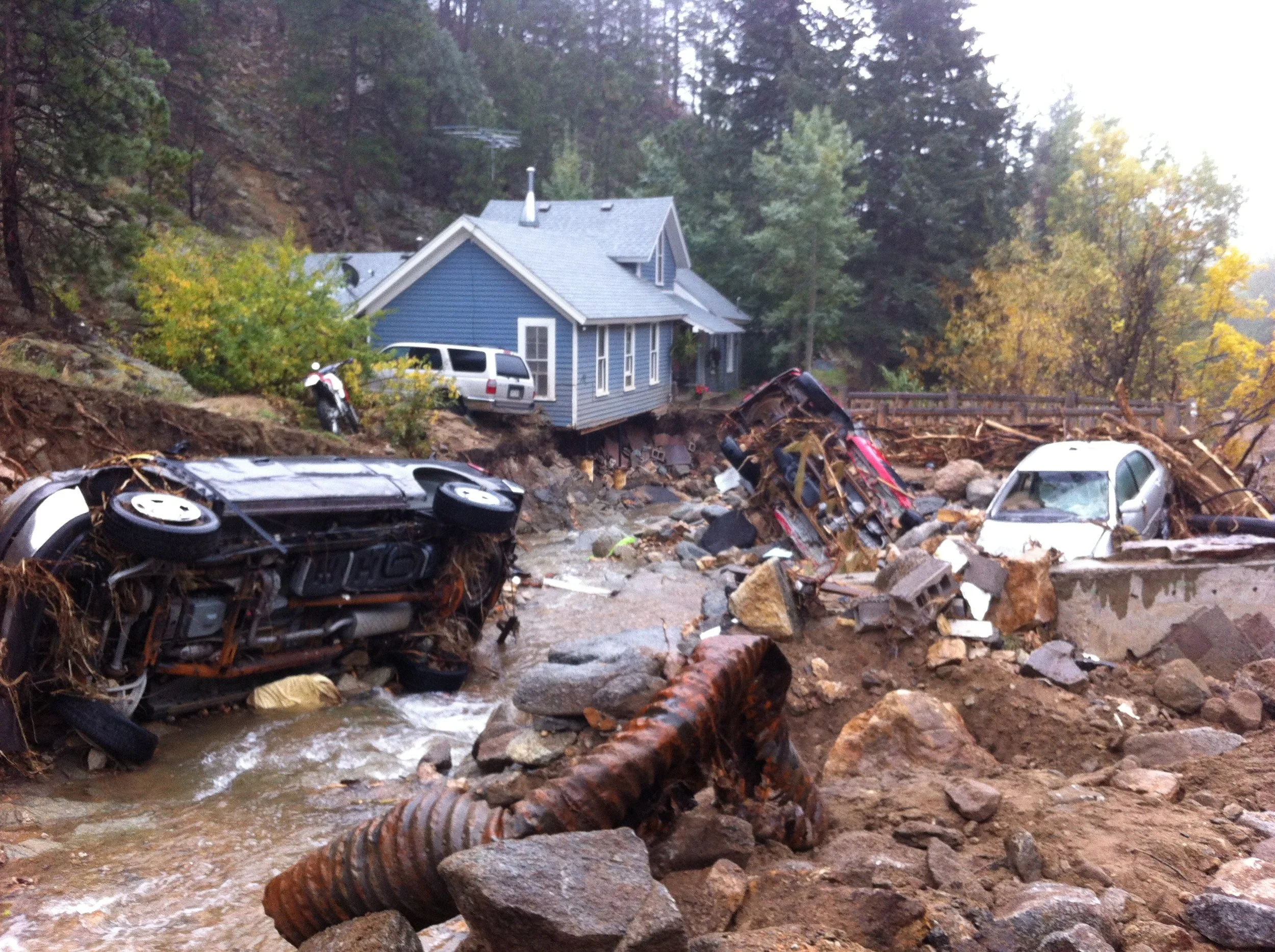
In September 2013, Boulder County experienced massive flooding that devastated communities and local businesses across the region. In 2014, BoCo Strong conducted twenty-two (22) resilience conversations in flood-impacted neighborhoods to hear directly from residents about what worked well during the floods, what could have been done differently, and what mattered most to them as they recovered.
A major finding was that neighborhoods, businesses, and communities with strong social connections — and connections to nonprofits and local government — responded more effectively and recovered faster. These connections supported the flow of information, access to resources, and mutual support at critical moments.
In response, BoCo Strong set out to intentionally build resilience and leadership by fostering connectedness and building capacity. The Resilience Leadership Program was created to strengthen social capital within and across cities and towns in Boulder County and to support residents in developing and implementing community-driven resilience initiatives.
Our Approach
Laura Seraydarian designed and facilitated a year-long, asset-based Resilience Leadership Program anchored by a series of workshops focused on assessing and building community resilience. The program combined capacity-building workshops, applied learning, and community-based project development. It supported leaders in engaging with their communities, as well as government staff, elected officials, and local organizations. Leaders conducted community resilience assessments and worked collaboratively to select, plan, and implement resilience-building projects.
The workshop series focused on the following topics:
Defining Resilience and Stressors
Introduction to Community Assessments
Community Assessments and Need Prioritization
Leadership and Communication
Outreach and Engagement
Mapping Community Assets and Initiatives
Advocacy and Local Government
Project Planning and Management
Grant Writing and Community-Based Proposals
Boulder County Resources
Project Sharing from Resilience Leaders
Impact & Outcomes
The Resilience Leadership Program strengthened leadership capacity, community connectedness, and locally driven resilience efforts across Boulder County.
Community Resilience Leadership Cohort
A cohort of Community Resilience Leaders was formed, representing six cities and towns across Boulder County. Through the program, leaders built relationships with one another, shared experiences across communities, and learned from peer-led projects and approaches.
Community Engagement
Leaders engaged their communities in diverse and locally appropriate ways, creating opportunities for residents to share priorities, concerns, and ideas. Community input directly informed resilience assessments, project selection, and implementation.
Community Resilience Assessments
Leaders assessed their community’s resilience using a community assessment tool developed by Laura. These assessments helped identify strengths, gaps, and priorities and provided a foundation for selecting and shaping community resilience-building projects.
Community Resilience Projects
Through the program, leaders initiated ten (10) community-led resilience projects. Some projects were completed during the program, while others continued to evolve and be implemented over multiple years. Beyond these initial efforts, many leaders have remained active in advancing resilience-building work in their communities well beyond the program timeframe.
Community resilience projects included:
Food Forest
Aging in Community
Community Center
Community Communications
Neighborhood Emergency Teams
Connecting by Communicating
Boulder Heights Directory
Storytelling
Perceptions of Homelessness
Resilience Fairs
Together, these projects reflect the range of ways leaders addressed resilience in their communities and the lasting role the program played in supporting locally driven action.
Resilience leadership Report
Prepared for BoCo Strong, Boulder County, and the State of Colorado Department of Local Affairs.